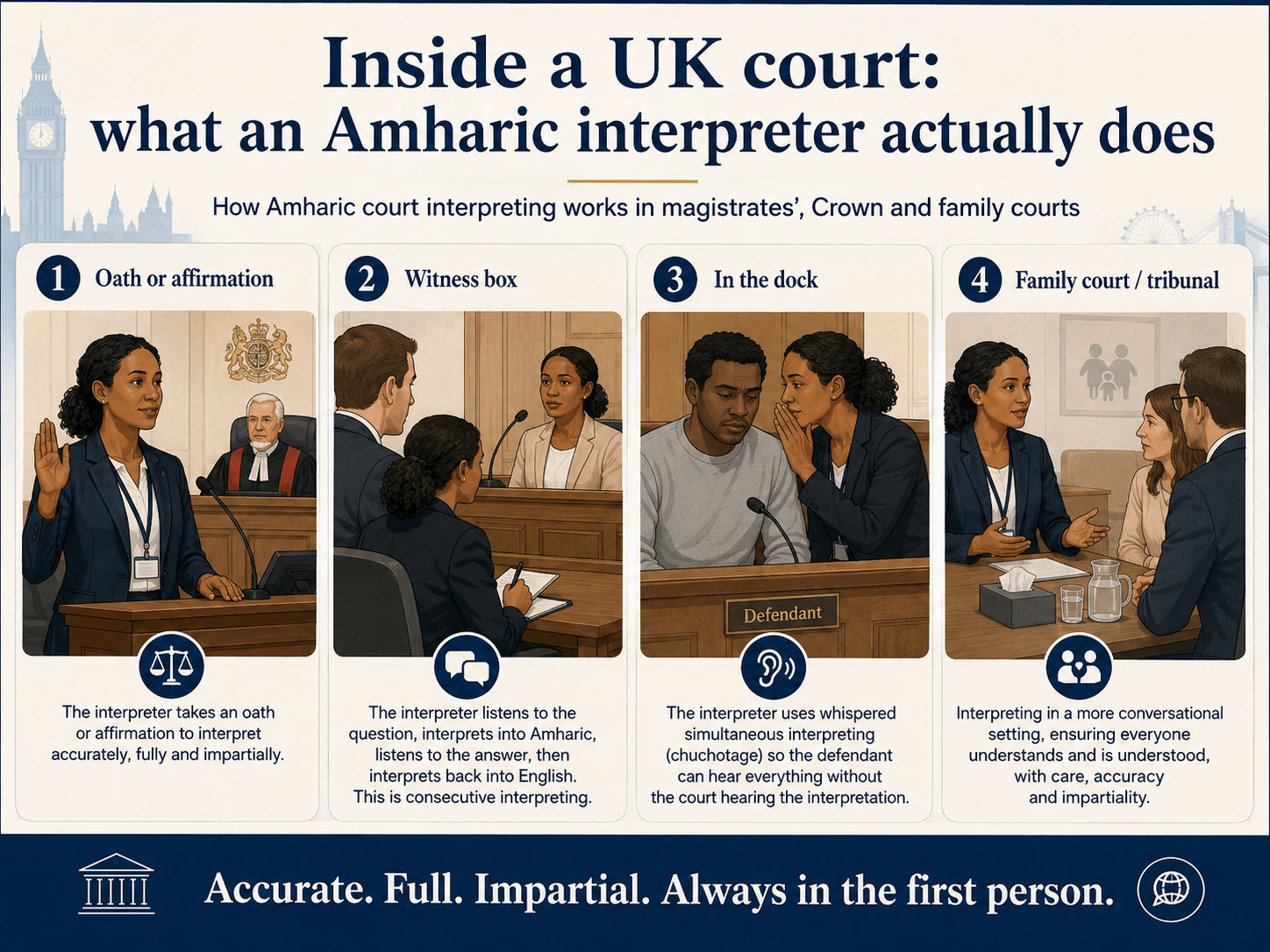
From the oath and consecutive interpreting in the witness box to whispered simultaneous in the dock — a clear look at how Amharic court interpreting works in magistrates’, Crown and family courts.
Court interpreting looks deceptively simple from the public gallery. In practice it is a tightly choreographed mix of modes, each one chosen to fit the moment in the proceedings.
At the start, the interpreter takes the interpreter’s oath or affirmation. From that point everything said in court is rendered into Amharic for the defendant or witness, and everything they say is rendered back into English — accurately, fully, and in the first person.
Evidence in the witness box is taken in the consecutive mode: counsel asks, the witness answers in Amharic, the interpreter renders. Pace is everything. While the defendant sits in the dock, the interpreter usually works in whispered simultaneous (chuchotage) so they can follow the argument in real time without slowing the court.
Family courts and tribunals run differently again — more conversational, often with vulnerable witnesses and special measures. The principles are the same: strict impartiality, no side convers